
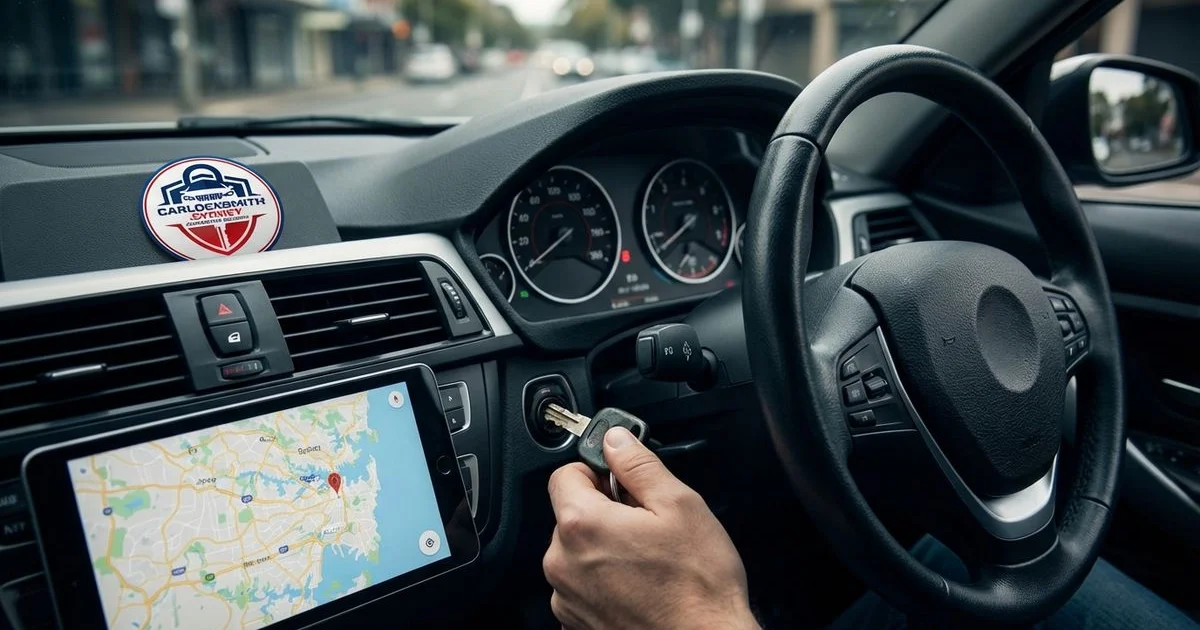
Key Stuck in the Ignition? Don’t Panic
You know that instant drop in your stomach when the engine stops, you reach for the key, and it simply refuses to move. We see this scenario play out daily with drivers across Sydney, from the humid coast to the western suburbs. It turns a routine commute into a sudden emergency.
Our team has handled thousands of these calls, and the solution is often simpler than you might fear. Most drivers immediately start pulling or twisting harder, which is the exact opposite of what the mechanism needs.
We are going to walk you through the safe, proven methods to release your key right now. This guide covers the specific mechanical quirks we see in Australian vehicles and the dangerous mistakes that can break your ignition barrel permanently. If the damage is beyond a quick fix, you may need a professional ignition repair or replacement.
Common Causes of a Stuck Ignition Key
Getting the key out requires understanding exactly what is holding it back. The culprit is usually one of four specific mechanical or electrical safety systems.
Steering Wheel Lock Tension
The steering lock is the most frequent cause of a stuck key in modern vehicles. When you park on a hill or turn the wheels sharply before shutting off the engine, the power steering pump releases tension. This torque settles against the locking pin in the ignition column.
We find that this “torque lock” creates a physical bind between the steering column and the ignition cylinder. The key cannot turn to the ‘Lock’ position because the pin is wedged tight against the cylinder wall.
The Shift Interlock Solenoid
Automatic vehicles have a safety component called the Shift Interlock Solenoid. This small electromagnetic switch ensures you cannot remove the key unless the transmission is strictly in ‘Park’.
Our technicians often see this solenoid fail or get stuck due to sticky spills (like coffee or soft drinks) seeping into the center console. If the car thinks it is still in ‘Drive’ or ‘Neutral’ because of a faulty sensor, it will physically lock the key in the barrel to prevent the car from rolling away.
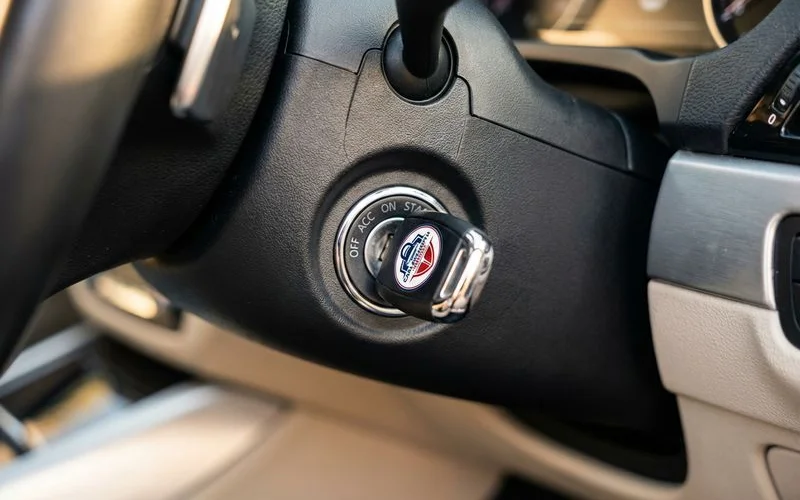
Worn Ignition Wafers (Tumblers)
Inside your ignition barrel are typically 8 to 10 small metal discs called wafers. Every time you insert your key, these wafers lift to a specific height to allow the cylinder to turn.
We frequently see these brass or zinc components wear down after about 80,000 to 100,000 kilometres. This is known as an ignition wafer problem. If a single wafer drops out of alignment or gets bent, it acts like a hook. It grabs the tip of your key and refuses to let go. This is particularly common in older Holden Commodores and Toyota Camrys where the “split wafer” design is prone to jamming.
Debris and Physical Obstructions
Pockets are full of lint, sand, and other tiny particles that transfer to your key. Over time, this debris packs into the back of the ignition cylinder.
Our mobile units often extract keys that are simply stuck on a compressed layer of pocket lint. This buildup prevents the key from pushing all the way in or retracting smoothly.
What to Try When Your Key Is Stuck
Please follow these steps in the exact order listed. We have arranged them from the easiest, non-destructive fixes to the more complex troubleshooting methods.
Step 1: The “Wheel Relief” Technique
Your goal here is to relieve the pressure on the locking pin mentioned earlier. Do not just wiggle the wheel randomly.
We recommend finding the “hard stop” direction. Turn the wheel gently; one way will feel springy, and the other will feel rock solid. You need to pull the wheel hard toward the rock-solid side and hold it there. While holding that tension, gently turn the key. The relief of pressure usually allows the pin to retract instantly.
Step 2: Verify the Transmission Position
Sometimes the gear selector looks like it is in Park, but it has not fully engaged the switch.
We suggest applying the brake firmly and shifting the car into ‘Drive’, then back into ‘Park’ with a solid push. Listen for a distinct click. If the key remains stuck, locate the Shift Lock Release slot. This is usually a small plastic cap near your gear stick. Pop the cap off and use a pen or screwdriver to press the button inside. This manually overrides the solenoid and may release your key.
Step 3: Check Your Voltage
A dead battery can cause the electronic locking system to freeze in the “engaged” state.
Our rule of thumb is to look at your dashboard. If the lights are dim or flickering, your battery voltage might be too low to energize the release solenoid. A quick jump start or connecting a booster pack often provides the surge needed to hear the “click” of the key releasing.
Step 4: Lubricate with the Right Product
Friction is the enemy of worn wafers. A specialized lubricant can provide just enough slip to slide the key out.
We strongly advise using a Teflon-based dry lubricant or a graphite spray. Avoid standard wet oils. Spray a small amount into the gap between the key and the cylinder. Let it sit for 60 seconds to penetrate the wafers before trying to wiggle the key again.

Step 5: The “Tap and Turn” Method
If a wafer is stuck in the wrong position, a vibration can sometimes seat it back into place.
We use the back of a screwdriver handle to gently tap the head of the key while simultaneously jiggling it. The vibration helps settle the pins or wafers. Use a rhythmic tapping motion rather than heavy hits.
What NOT to Do
Panic leads to force, and force leads to broken hardware. Avoiding these errors can save you hundreds of dollars in repair costs.
- Avoid using pliers or grips. Gripping the plastic head of the key with tools applies too much torque. This usually snaps the key blade off inside the lock, turning a $180 repair into a $500 extraction job.
- Never use WD-40. Standard WD-40 attracts dust and eventually dries into a sticky, gum-like residue. This gunk ruins the delicate springs inside the ignition barrel over time.
- Do not force the gear shifter. Yanking the gear stick without pressing the brake or the override button can snap the shift linkage cable.
- Do not ignore the warning signs. If you get the key out, do not put it back in “just to check.” Drive directly to a repair shop or call a locksmith while the key is out.
Comparison: DIY vs. Professional Solutions
Making the right choice depends on the severity of the jam. Here is how the options stack up in terms of risk and cost.
| Method | Estimated Cost (AUD) | Risk Level | Time Required |
|---|---|---|---|
| DIY Wiggle/Lube | $15 - $20 (Lubricant) | Low | 5-15 Minutes |
| Mechanic / Garage | $200 - $600 | Low | 1-2 Days (Towing often required) |
| Mobile Locksmith | $180 - $350 | Very Low | 45-60 Minutes (On-site) |
When to Call a Professional Locksmith
Sometimes the mechanical failure is terminal. You need to know when to stop trying before you cause damage to the steering column.
We recommend calling for help if the key has been stuck for more than 15 minutes. Other critical signs include:
- The key is visibly bent or the plastic head is cracked.
- You hear a “crunching” sound when turning the key (indicates collapsed wafers).
- The ignition housing feels hot to the touch (possible electrical short).
- The steering wheel is completely free, but the key won’t move.
A professional automotive locksmith brings specialized extraction tools that slide along the fluting of the key to depress the wafers manually. We can typically decode the lock on-site, cut a fresh car key replacement, and repair or replace the ignition barrel in one visit.

Cost of Professional Stuck Key Removal in Sydney
Pricing varies based on the make of your car and the time of day, but having a baseline helps you avoid overpaying.
Our data from 2025 shows that a standard extraction without barrel damage typically costs between $180 and $250 AUD. If the ignition barrel is collapsed and requires drilling or replacement, the cost generally ranges from $350 to $550 AUD, including parts and recoding the new lock to match your existing door keys. Luxury vehicles or push-to-start systems with stuck fobs may command higher rates due to complex anti-theft computers.
Prevention Tips
You can prevent this stressful situation by changing a few daily habits.
- Audit your keychain weight. Heavy clusters of keys, gym tags, and trinkets swing while you drive. This pendulum effect wears out the internal wafers prematurely.
- Check your key’s profile. If your key looks like a smooth butter knife rather than a jagged saw, it is too worn. Get a new key cut by code (not duplicated from the old one) to restore the original shape.
- Use the parking brake first. Engage the handbrake before releasing the foot brake when you park. This rests the car’s weight on the brakes, not the transmission parking pawl.
- Lubricate annually. A quick spray of dry lubricant once a year keeps the tumblers moving freely.
A stuck key is almost always the final symptom of a problem that has been developing for months. Taking action the first time you feel a “catch” or “sticky spot” in your ignition will save you from being stranded later.
Looking for this service?
View our ignition repair service →